Read for patterns, not just praise
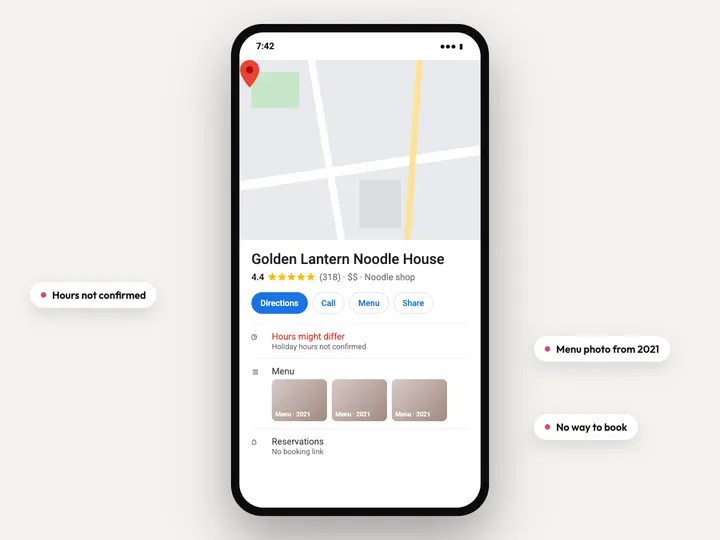
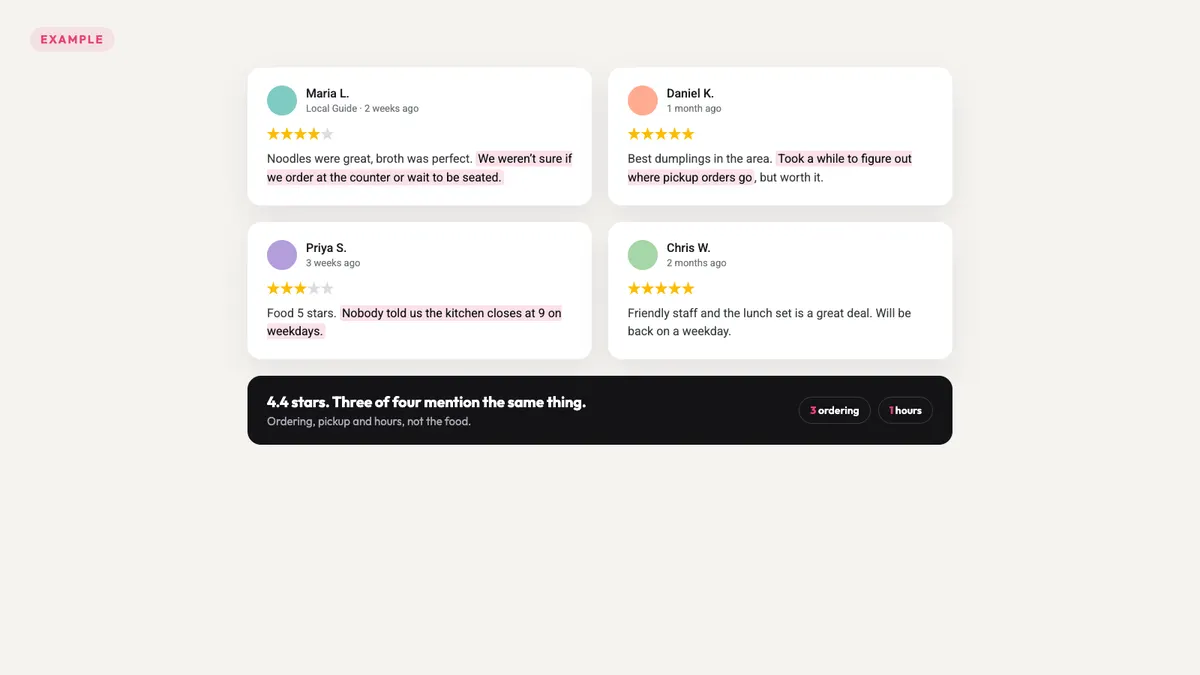
If several guests mention confusion about pickup, the useful question is not simply how to get more positive reviews. It is whether the ordering instructions and handoff are working.
Google’s review guidance requires genuine experiences and prohibits incentives in exchange for reviews or changes to reviews. A reputation process should improve listening and response, not manufacture a cleaner-looking score.
Group feedback without losing context
Our recommendation is to review themes such as food consistency, wait communication, service recovery and booking friction. Keep the date and location attached internally. A comment about one branch should not automatically become a claim about the entire business.
Hypothetical example: comments repeatedly mention not knowing where to collect takeout. The manager checks signage and staff instructions, then monitors whether the same issue continues. The review pattern suggests an investigation; it is not a representative survey of all guests.
Reply to the person, not the algorithm
Use a concise, relevant response. Acknowledge the concern without exposing order records, contact details or sensitive circumstances. Move case-specific follow-up to an appropriate private channel. Serious safety allegations need internal escalation, not a promotional reply template.
Do not pressure guests to remove criticism as a condition of resolution. Ask for honest feedback consistently rather than filtering requests only to people likely to praise the business.
Record the action taken and whether the issue recurs. A monthly summary should connect review themes to decisions, not simply display a rising star graphic.
Explore Reputation Management. Limitations: reviews are self-selected, may be inaccurate and cannot establish causation. Verify operational facts before acting on an allegation or making public claims.
资料来源
- Tips to get more reviews Google Business Profile Help · accessed 2026-10-30
PandaPath Growth Lab 原创内容。文中引用的数据、平台功能和政策均已注明原始来源;标注“假设示例”的内容仅作说明,并非客户案例。